
NEWS
Another 18,500 DWT Chemical Tanker of the Series Delivered
 TIME:2026-09-12 10:52
 AUTHOR:Wuhu Shipyard VIEWS:0
Recently, the company delivered one 18,500 DWT chemical tanker of the series to the shipowner, marking another delivery of this vessel series.
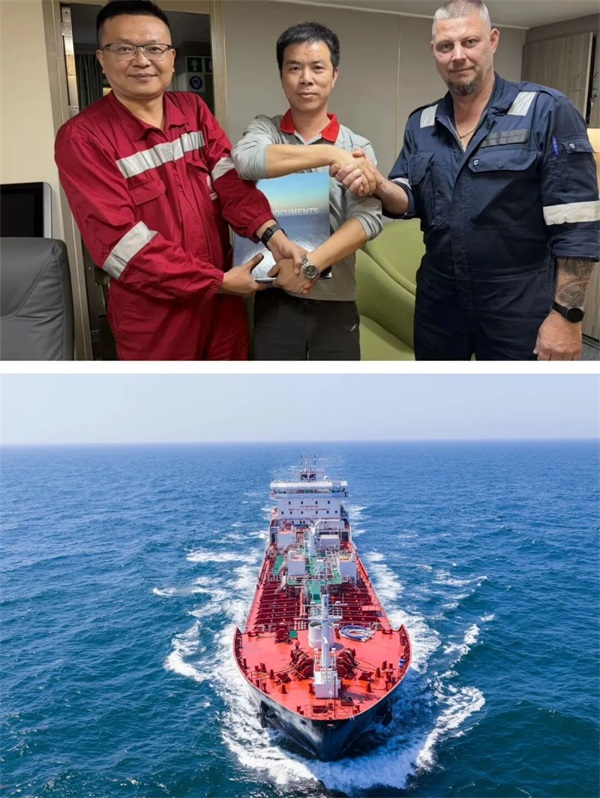
The vessel has an overall length of 149.8 m, a moulded breadth of 22.80 m, a moulded depth of 12.70 m, a design draught of 8.50 m and a scantling draught of 9.5 m. It adopts an efficient hull form combined with an energy-saving duct device and is equipped with a methanol-ready design.
Innovative Power System
The vessel is fitted with a controllable pitch propeller (CPP) and shaft generator system. During normal seagoing operations, the diesel generators do not need to be started. The main engine alone drives the shaft generator to supply continuous power for navigation equipment. The ship is equipped with a pitch and speed optimization system, which can measure, analyse and optimize operational data. By optimizing and adjusting commands for main engine speed and propeller pitch, the system reduces fuel consumption. Propulsion efficiency optimization operations can be performed from the wheelhouse. The system can also smooth operating condition fluctuations and avoid energy consumption peaks. In controllable pitch propeller mode, it further improves the vessel’s propulsion efficiency through collaborative optimization of propeller pitch and main engine speed.
Green and Low-carbon Layout
The vessel is equipped with a methanol-ready dual-fuel main engine. In addition to fuel oil, it can be retrofitted to run on clean methanol fuel in the future. All emissions comply with IMO Tier III, the most stringent NOₓ emission standard. During construction, foundations and cabling for rotor sails have been reserved. Wind-assisted propulsion units can be retrofitted at a later stage to harness wind energy for fuel savings and further improve the vessel’s green and energy-saving performance.
The vessel is designed with 6 pairs of cargo oil tanks (including 1 slop tank) and 6 pairs of ballast water tanks, with a liquid cargo tank capacity of 21,000 m³. It is dual-fuel ready (methanol-ready) in accordance with the LFL classification. The main engine can be converted to a methanol dual-fuel engine. An SCR system is fitted to meet Tier III emission requirements. A PSD energy-saving duct device is installed at the stern to optimize the aft flow field, reduce ship resistance and achieve energy conservation and carbon reduction.
The vessel complies with environmental requirements under international conventions and regulations, and is capable of unrestricted navigation, including in emission control areas of the EU, the United States and other regions. The inner bulkheads of cargo tanks adopt the world-leading MARINE Line special coating material and special coating process. Its cargo compatibility is far superior to other mainstream special coating materials available on the market, greatly improving the operational economy of the vessel. The ship has Ice Class IB navigation capability. Compared with conventional chemical tankers, its operational scope is significantly expanded.
Upgraded Shipbuilding Technology
In terms of construction technology and process upgrading, the vessel has undergone multiple optimizations and upgrades based on compliance and practicality. The team carried out modifications to key structures such as hose crane brackets and deck platforms to further improve the structural compliance of the vessel and consolidate the safety foundation for navigation and operation. Meanwhile, this series of ships is equipped with a super stripping system for the first time, enabling thorough and automated cleaning of cargo oil tanks and greatly improving the cleaning efficiency and cleanliness accuracy of cargo oil tanks. This advanced system will also be fitted on follow-up vessels.
Throughout the construction phase, the vessel was subject to multiple pressures including tight schedule and various obstacles. Offshore operations and certain construction periods were restricted, resulting in a shrinking effective working window. Faced with these adverse conditions, the project team dynamically adjusted construction organization, scientifically arranged work sequences, seized limited working opportunities and fully ensured the project progress.
The schedule may be compressed, but quality will never be compromised. All team members strove for excellence, turning the "timeline" into a "commitment letter" and translating "high standards" into every detail. The team achieved overall quality improvement within the tight timeframe and fulfilled the client’s high-end expectations with dedicated craftsmanship.

A CENTURY-OLD WUHU SHIPYARD,
REGARDING REVITALIZING THE NATIONAL SHIPBUILDING INDUSTRY AS OUR OWN DUTY
- Civilian Products
- Non-Ship Products
- PARTNER